Commercial Warehouse
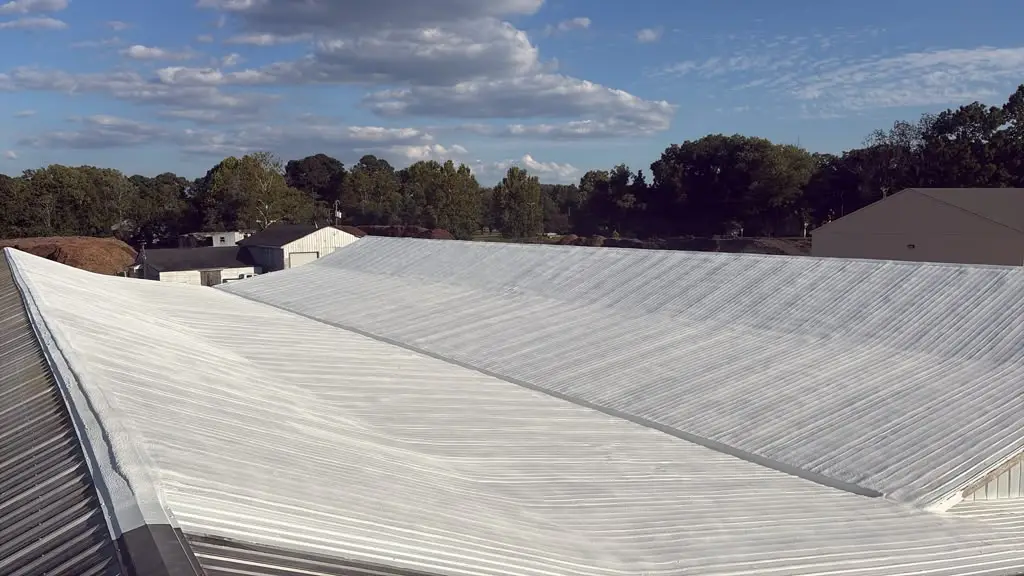
Spray polyurethane foam roof system with coating
Project Overview
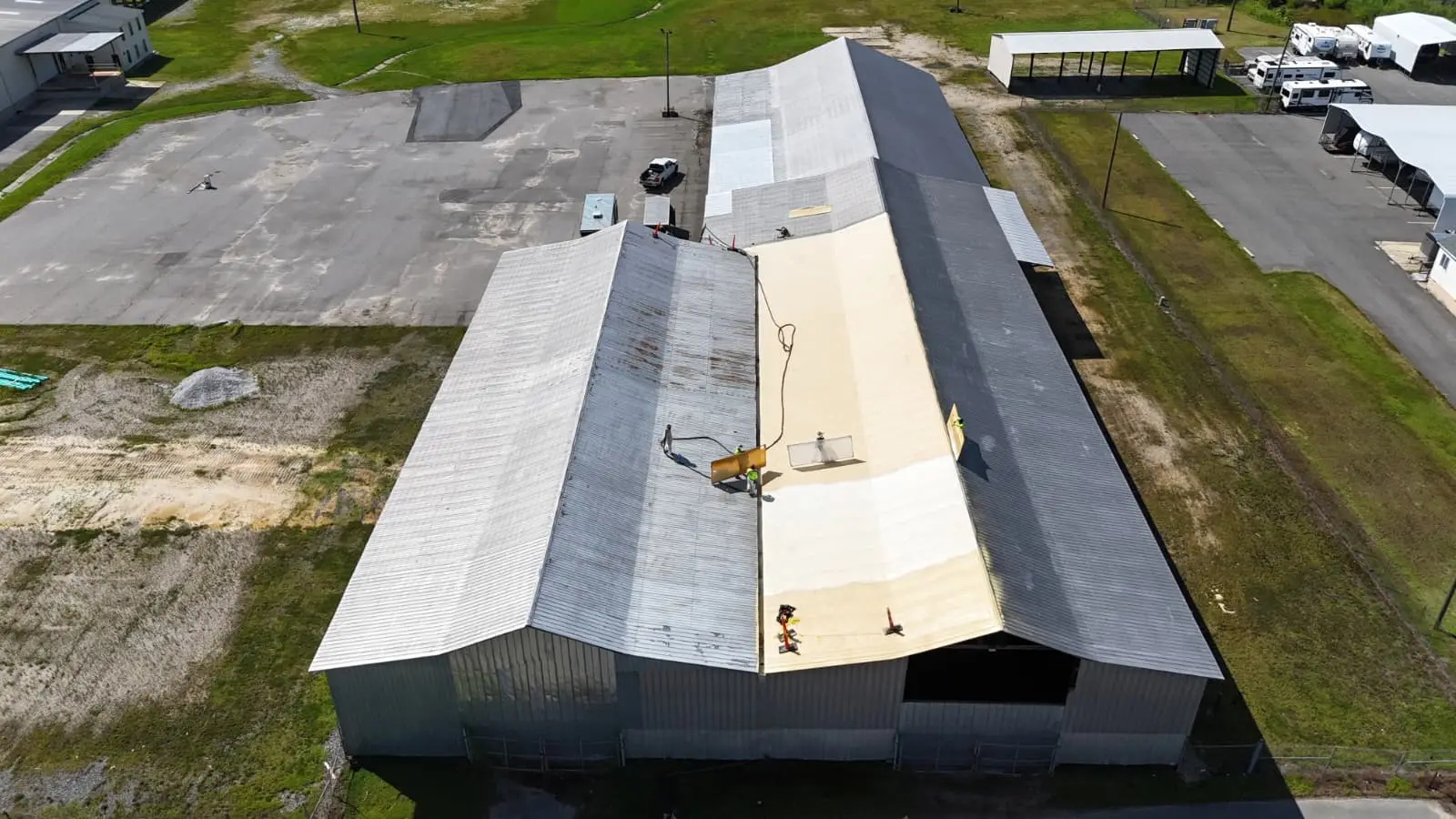
This commercial warehouse in Toano, in James City County, is owned by a real estate services company. It is a multi-gable metal building of about 18,000 square feet, with several roof sections meeting in long valleys.
The owner wants to lease space in the building. The roof had a lot of damaged metal panels, and the building had no insulation at all, which makes it hard to rent. The owner needed a roof that would stop the damage problem and make the space more usable for a tenant.
Job Photos
 Before
 Before
 During
 During
 During
 Finished
The Challenge
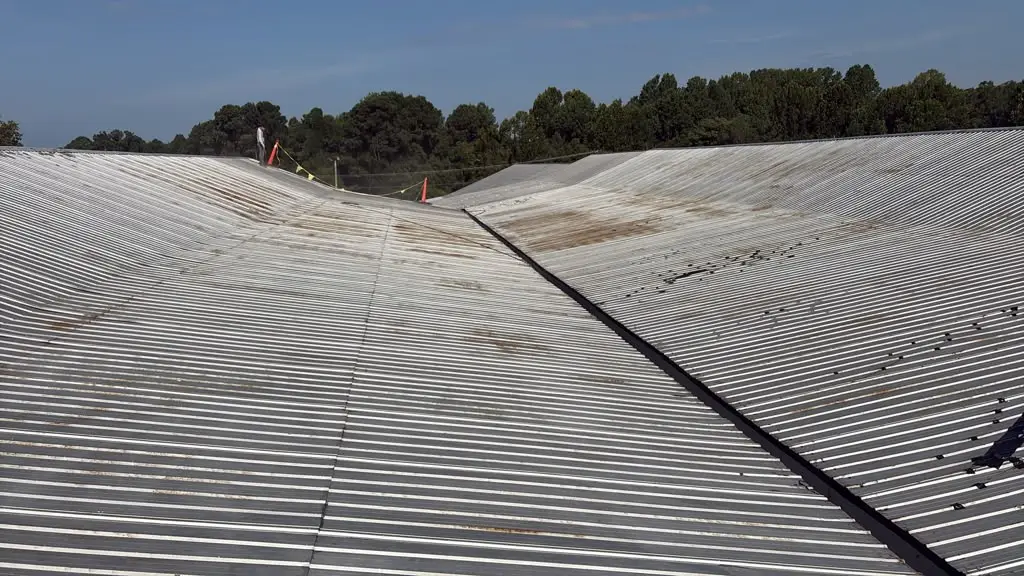
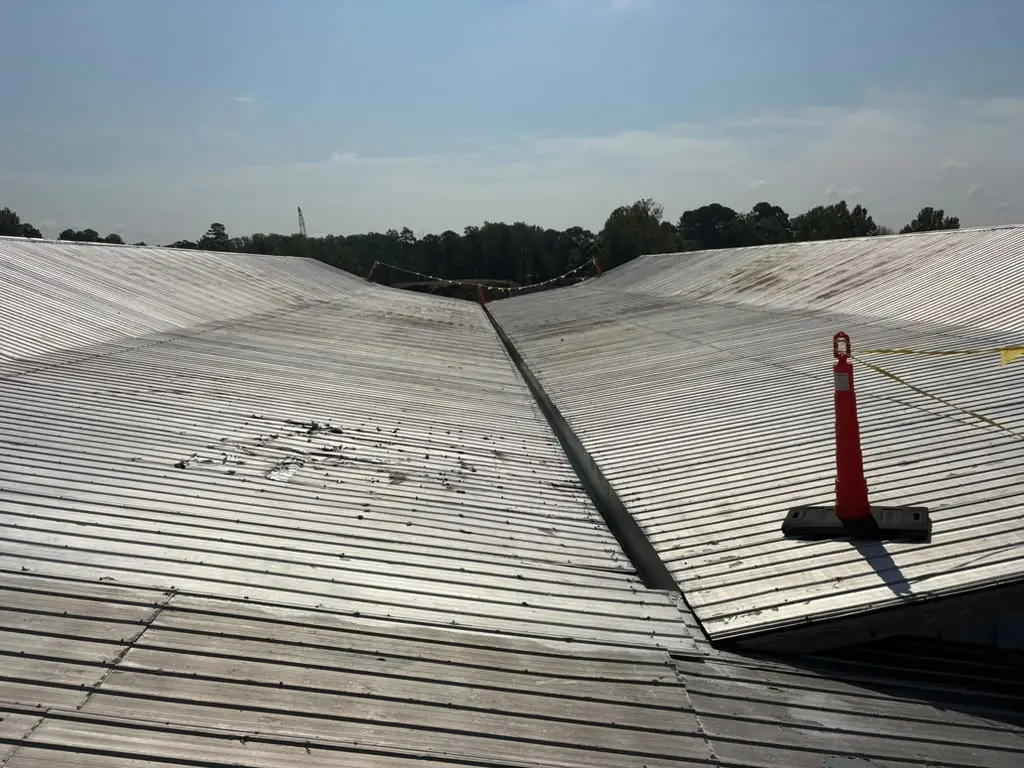
Replacing the damaged panels across a building this size would have been a big job and a big expense. Our before photos show worn, stained metal across the gables and long valleys where the roof sections meet, which are areas that collect water and debris.
The lack of insulation was the other half of the problem. An uninsulated metal building gets very hot in summer and cold in winter, and adding insulation from the inside of an occupied or leasable warehouse brings its own cost and disruption.
Our Solution
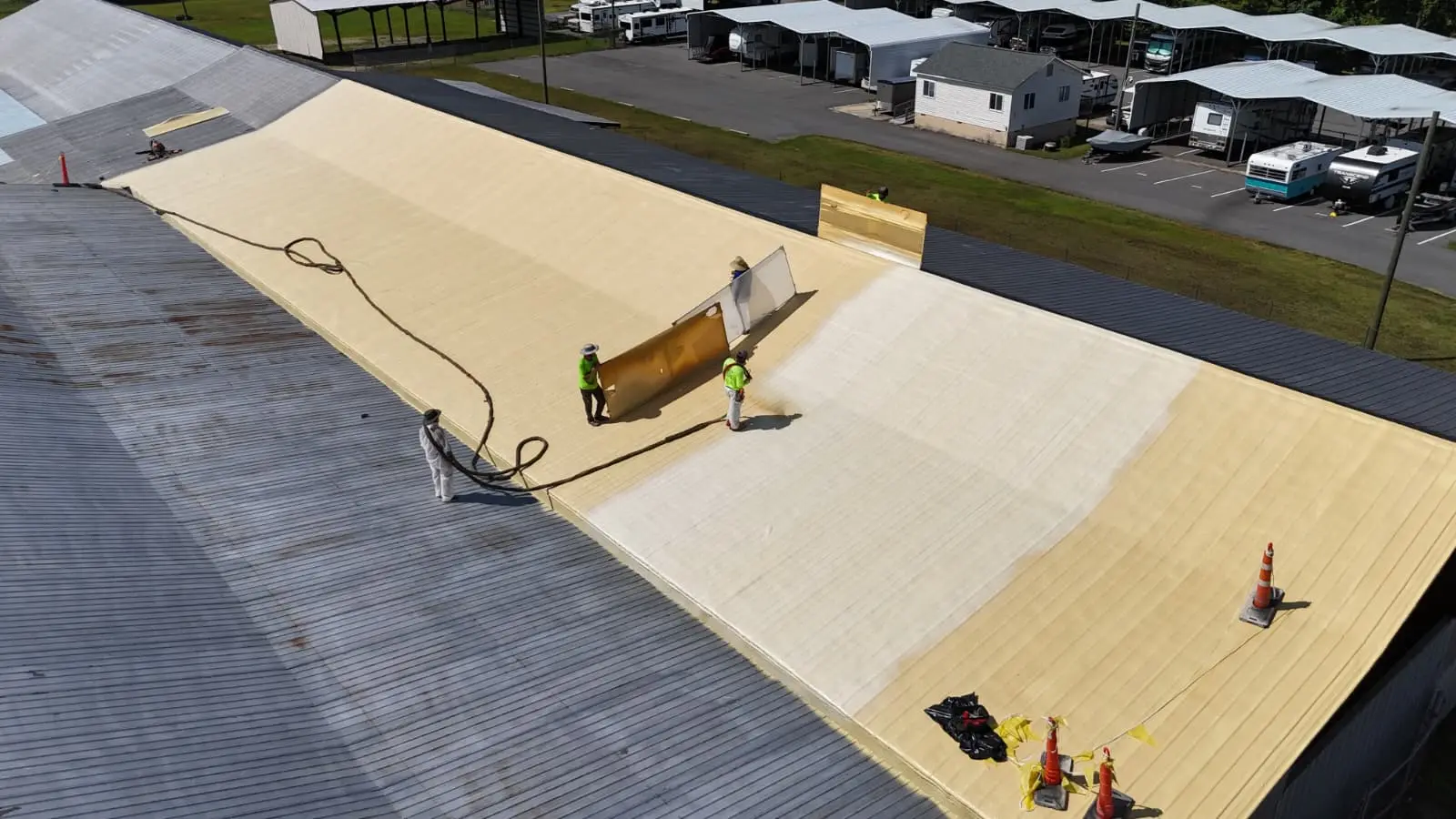
We cleaned the roof and installed a spray foam roof system over the existing metal, then coated it. Spraying the foam on the outside let us avoid replacing the damaged panels, and the foam added R-10 insulation to the roof.
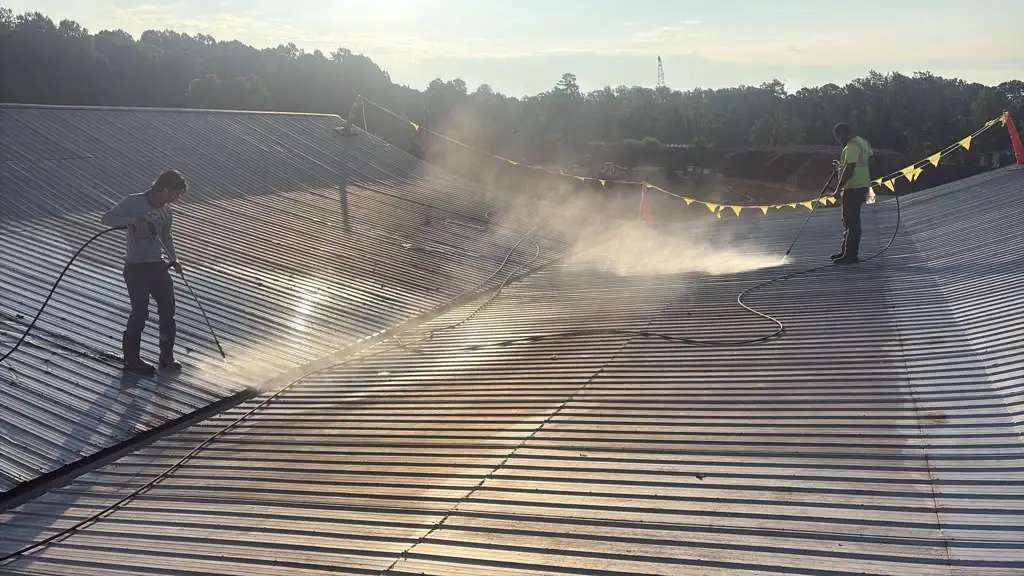
- 1We pressure washed the metal roof to clean the surface for the foam.
- 2We sprayed polyurethane foam over the existing metal panels on each gable.
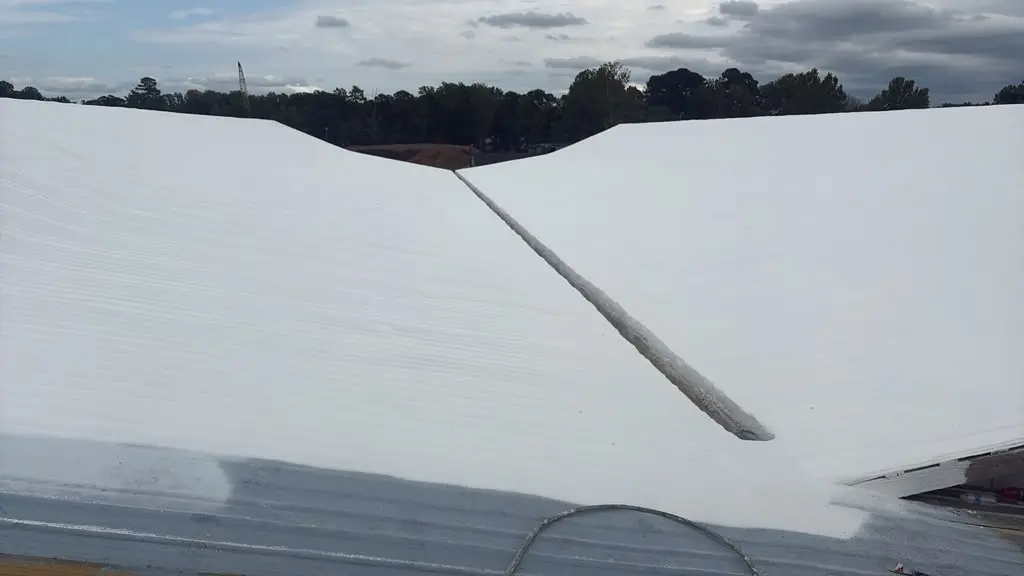
- 3We carried the foam through the valleys where the roof sections meet.
- 4We applied a protective coating over the foam to finish the roof.
Why This Approach
Spray foam fixed both problems with one system. Because it bonds directly to the metal and forms a continuous layer, it covers damaged panels, seams and fasteners without removing them. Because it is also insulation, putting it on the outside of the roof insulates the building without any interior work. Foam needs a coating over it for UV protection, and a light-colored coating also reflects sunlight, which helps a metal building stay cooler.
Results
- About 18,000 square feet of metal roof covered with spray foam and coating
- Damaged metal panels covered without replacing them
- R-10 insulation added to a building that had none
- Building in better shape to lease
Common Questions
Can you insulate a metal building from the outside?
Yes. Spray polyurethane foam applied over the exterior of a metal roof acts as both the roofing and the insulation. The foam is then coated to protect it. This avoids interior work and keeps the inside of the building usable while the roof is done.
How much insulation does spray foam roofing add?
It depends on the thickness of the foam. Polyurethane roofing foam provides roughly R-6 or more per inch, so the R-value is set by how many inches are sprayed. On this warehouse, the foam added R-10.
Does spray foam work on a multi-gable roof with valleys?
Yes. Foam is sprayed in place, so it follows slopes, ridges and valleys and can be built up at transitions. The valleys still need to drain freely, so the foam is applied in a way that keeps water moving off the roof.
Need a Similar Solution?
Contact us today for a free inspection and consultation on your commercial roofing project.