Central Virginia Assembly of God
Partial tear-off, spray foam and two-coat acrylic
Project Overview
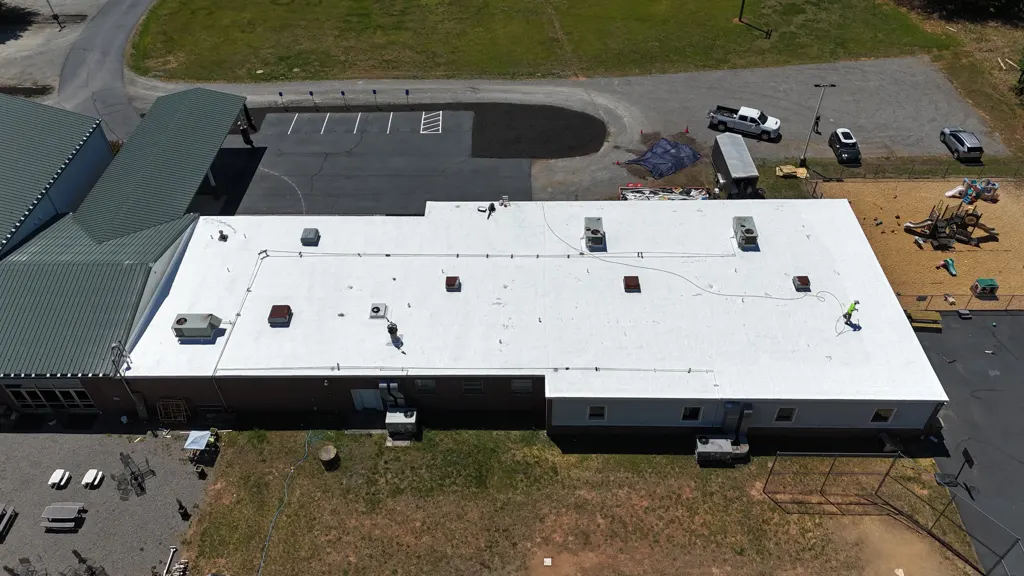
Central Virginia Assembly of God is at 5052 Cross County Road in Mineral, in Louisa County near Zion Crossroads. The church has a long, flat roof over its main building, with several HVAC units along its length.
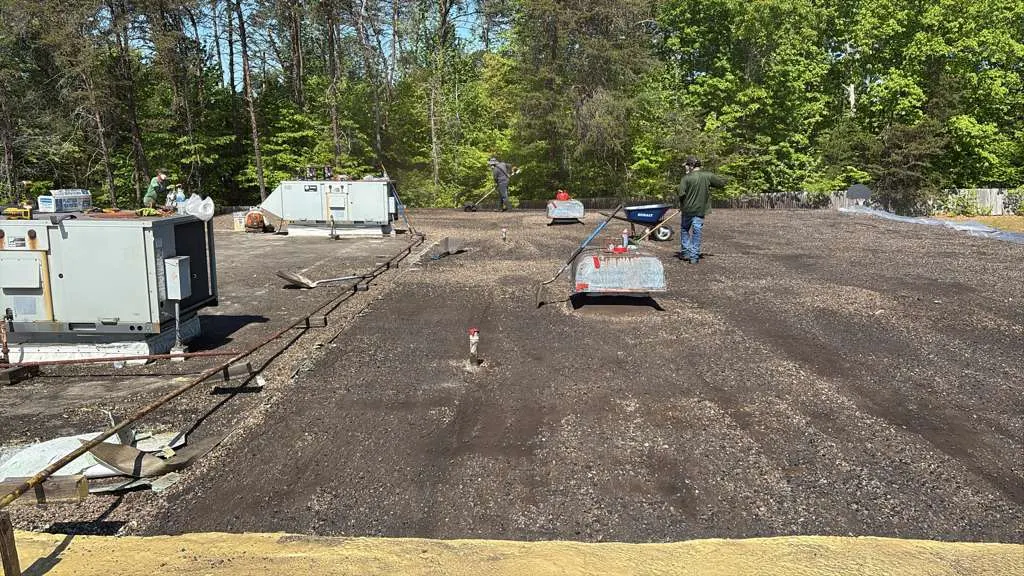
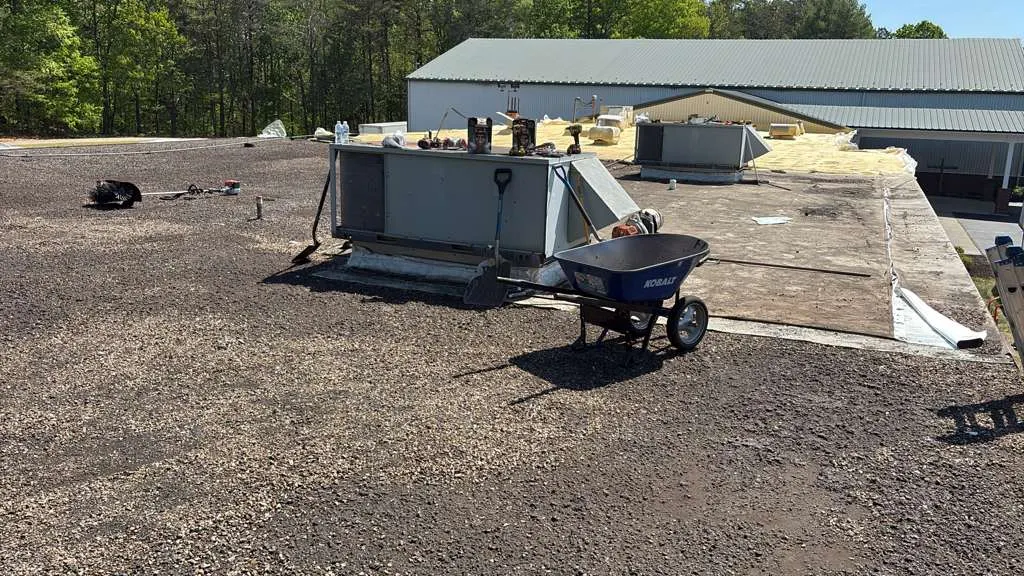
The roof was a TPO layer installed over an older tar and gravel roof. The church needed a new roof system over that long flat area that would hold up and protect the building for years.
Job Photos
 Before
 Before
 During
 During
 FinishedFinished
The Challenge
Layered roofs are harder to fix than single roofs. Here, a TPO membrane had been laid over an old tar and gravel roof, so any new system had to deal with both. Gravel embedded in tar makes a rough, uneven surface, and a new roof system cannot bond well to it.
The length of the roof and the number of rooftop units also meant a lot of area and a lot of details to work around, with each unit needing to be sealed into the new roof.
Our Solution
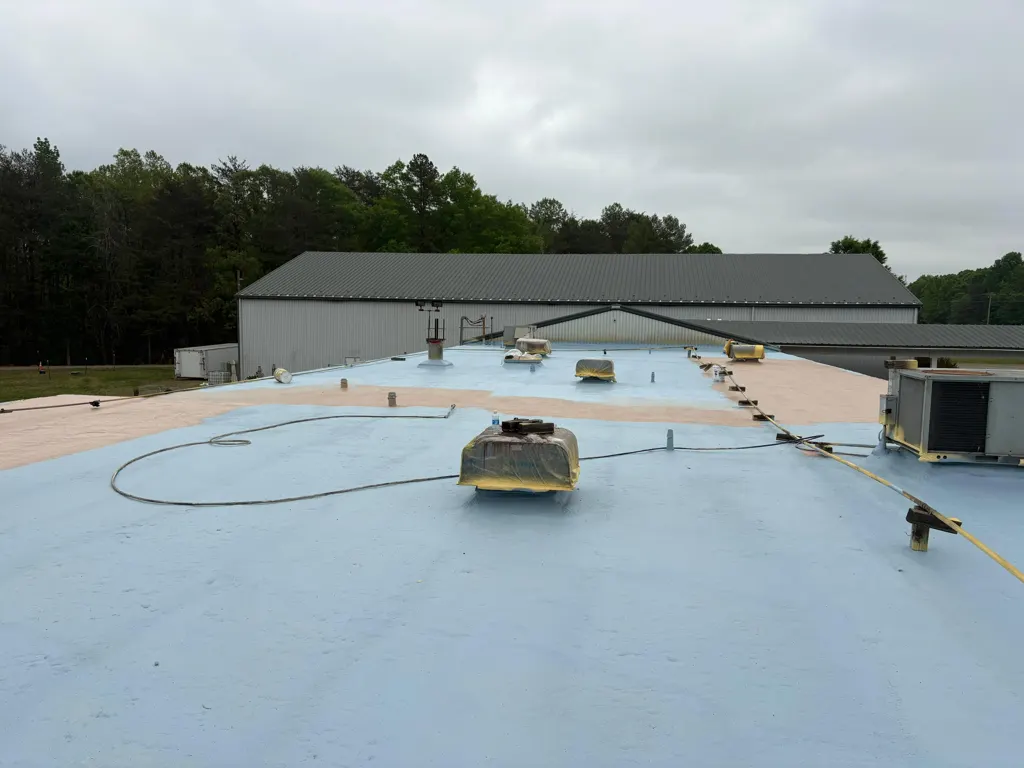
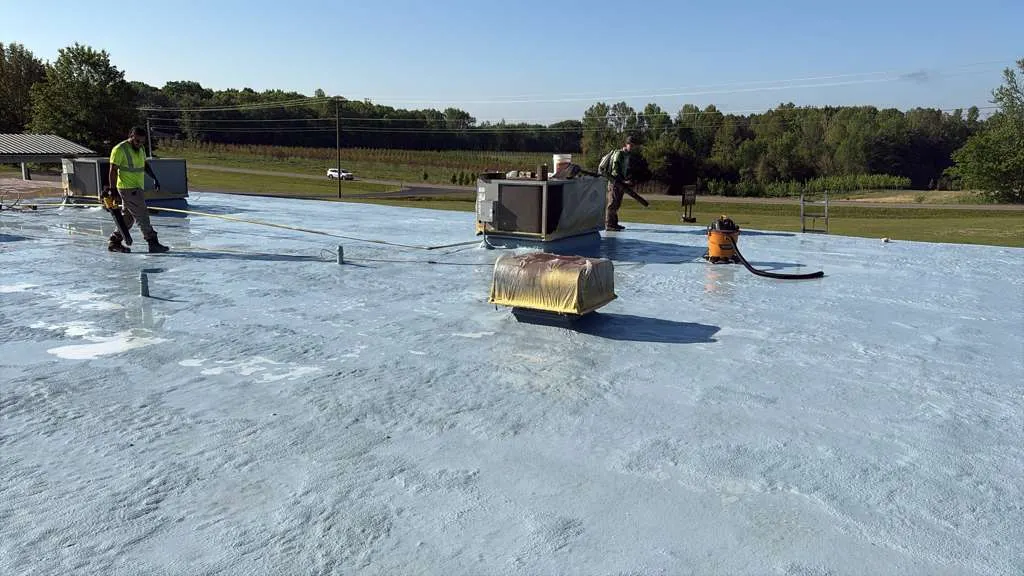
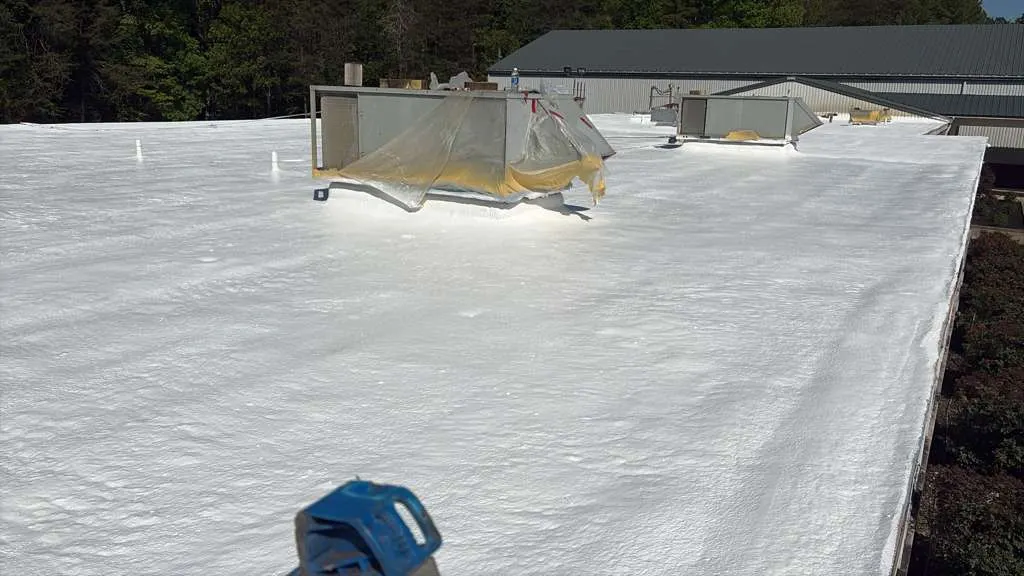
We tore off the TPO layer, removed the gravel from the tar and gravel roof underneath, installed spray polyurethane foam, and finished it with two layers of acrylic coating. The light-blue first coat went down first, followed by a white second coat, which makes it easy to confirm full coverage.
- 1We tore off the TPO layer.
- 2We removed the gravel from the old tar and gravel roof underneath.
- 3We installed spray polyurethane foam across the roof and around the rooftop units.
- 4We applied the first layer of acrylic coating over the foam.
- 5We applied a second layer of acrylic coating to finish the roof.
Why This Approach
Spray foam can go over a properly prepared built-up roof, which avoids tearing the whole roof down to the deck. Removing the TPO and the loose gravel gives the foam a surface it can bond to. Because the foam is sprayed in place, it seals around HVAC curbs and other details without seams. Two coats of acrylic, applied in different colors, protect the foam from sunlight and give a white, reflective finish.
Results
- TPO layer torn off
- Gravel removed from the old tar and gravel roof
- Spray foam installed over the long flat roof
- Two layers of acrylic coating, finished in white
Common Questions
Can spray foam roofing go over a tar and gravel roof?
Yes, with the right prep. Loose gravel is removed, the surface is cleaned, and any wet areas are cut out. The foam then bonds to the old roof and forms a new continuous surface. A moisture survey is a good idea first, so wet insulation is not sealed in.
Why are roof coatings applied in two colors?
Using a different color for each coat lets the crew and the owner see that the second coat fully covers the first. It is a simple quality check that helps make sure there are no thin or missed spots.
Need a Similar Solution?
Contact us today for a free inspection and consultation on your commercial roofing project.